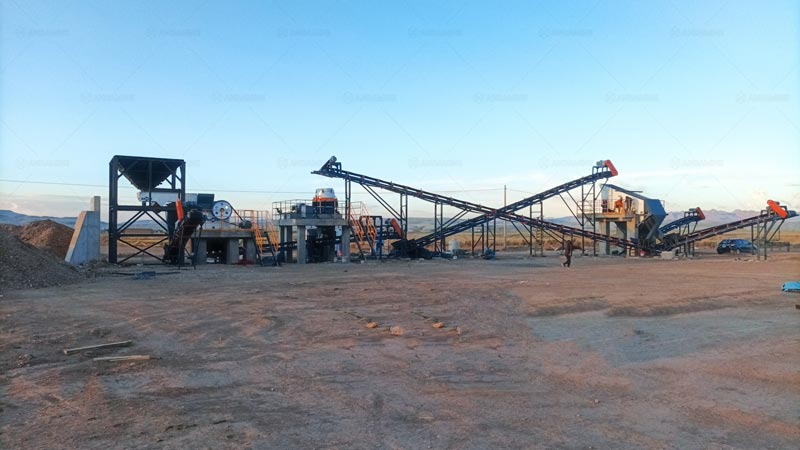
Across Latin America, large-scale investments in water infrastructure and power generation are accelerating. Projects such as hydroelectric dams, reservoirs, irrigation systems, flood control facilities, and power transmission corridors require enormous volumes of construction materials. Among them, aggregates—such as crushed stone, gravel, and sand—are essential for concrete production, road construction, and structural foundations. For contractors and investors, establishing an efficient aggregate supply chain has become a strategic priority.
In this context, the aggregate industry has a unique opportunity to work closely with infrastructure developers. By deploying equipment such as an aggregate crusher plant(planta trituradora de agregados), a stone crusher plant, or a mobile stone crusher plant near project sites, aggregate producers can significantly reduce logistics costs, stabilize supply, and improve construction efficiency. This synergy not only supports infrastructure delivery but also creates long-term value for quarry operators and equipment providers.
Water and power projects are among the most aggregate-intensive construction activities. Hydropower dams, spillways, canal linings, and power station foundations all require high-strength concrete, which depends heavily on consistent aggregate supply.
Hydroelectric dams often require millions of tons of aggregates during construction. The concrete used in dam structures must meet strict gradation and strength requirements, which means that a reliable stone crusher plant(planta de trituracion de piedra) is essential for producing high-quality crushed materials.
By installing an aggregate crusher plant near the construction site, project developers can reduce long-distance transportation costs and ensure continuous production of aggregates. This approach is particularly valuable in remote mountainous regions of Latin America where transportation infrastructure may be limited.
Beyond hydropower, Latin American countries are also investing heavily in irrigation systems, flood control structures, and water storage facilities. These projects require aggregates for canal linings, retaining walls, drainage systems, and service roads.
A mobile stone crusher plant can be especially useful for these projects because irrigation networks often extend over long distances. Instead of transporting aggregates across multiple sites, contractors can relocate a mobile stone crusher plant along the project corridor, producing materials exactly where they are needed.
To fully benefit from water and power infrastructure investments, aggregate producers must adopt a more collaborative approach with project developers, engineering contractors, and government agencies.
One effective strategy is to establish temporary or semi-permanent crushing facilities near infrastructure projects. A well-designed aggregate crusher plant can process raw rock from nearby quarries and supply aggregates directly to concrete batching plants operating on the project site.
This arrangement improves production efficiency while reducing material handling costs. In addition, a stone crusher plant can be configured to produce multiple aggregate sizes required for different structural components, such as dam concrete, road base layers, and drainage materials.
Infrastructure projects often evolve over time, with construction zones shifting as the project progresses. In such cases, flexibility becomes a major advantage. A mobile stone crusher plant(planta trituradora de piedra movil) allows contractors to move crushing operations closer to active work zones, minimizing haul distances and improving overall logistics efficiency.
For example, during dam construction, a mobile stone crusher plant can first supply aggregates for foundation works and later be relocated to produce materials for access roads or auxiliary structures.
When aggregate production is integrated directly into water and power infrastructure projects, several operational advantages emerge.
Transportation often represents a significant portion of aggregate costs, especially in regions with complex terrain such as the Andes or the Amazon basin. By deploying a stone crusher plant or aggregate crusher plant close to the project site, contractors can dramatically reduce hauling distances.
Lower transportation costs translate into more competitive project budgets and faster construction timelines.
Infrastructure projects require aggregates that meet strict technical specifications. Operating an aggregate crusher plant near the construction site allows engineers to closely monitor aggregate gradation, cleanliness, and mechanical strength.
Quality control becomes easier when production and consumption are closely connected. This is particularly important for large concrete structures like dams or power station foundations.
When aggregates are produced locally using a mobile stone crusher plant or a stationary stone crusher plant, contractors can maintain a steady supply of materials without relying on distant suppliers.
This reduces delays caused by supply disruptions and ensures that concrete production schedules remain stable throughout the project lifecycle.
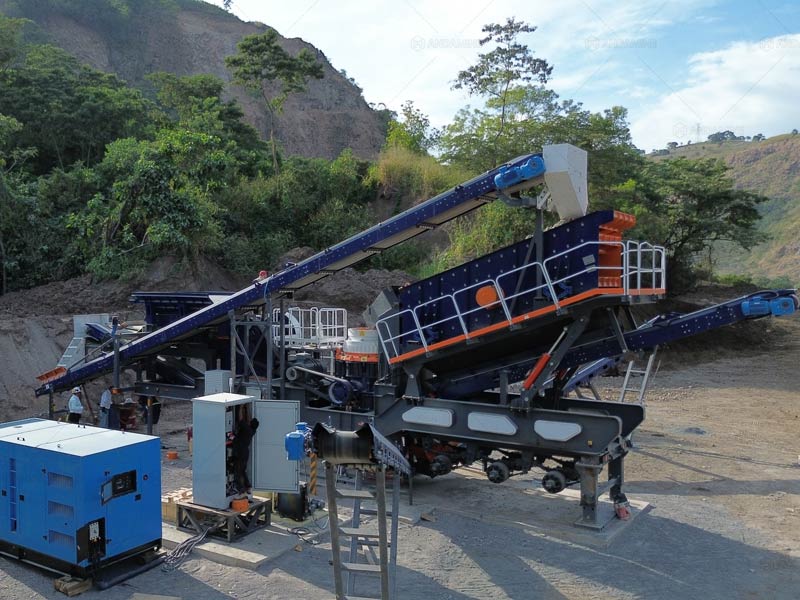
Latin America is expected to continue expanding its investments in renewable energy and water management over the next decade. Hydropower modernization, new irrigation projects, and climate-resilient infrastructure will all drive demand for aggregates.
For aggregate producers, this trend represents a valuable opportunity. Companies that invest in efficient crushing solutions—such as a modern aggregate crusher plant, a flexible mobile stone crusher plant, or a high-capacity stone crusher plant—will be better positioned to support large infrastructure projects.
By forming partnerships with construction contractors and government agencies, aggregate suppliers can become integral participants in the region’s infrastructure development. Instead of simply providing raw materials, the industry can deliver integrated material solutions that help water and power projects move forward more efficiently and sustainably.
Ultimately, the collaboration between the aggregate industry and infrastructure developers will play a key role in shaping the next generation of water and energy systems across Latin America.